
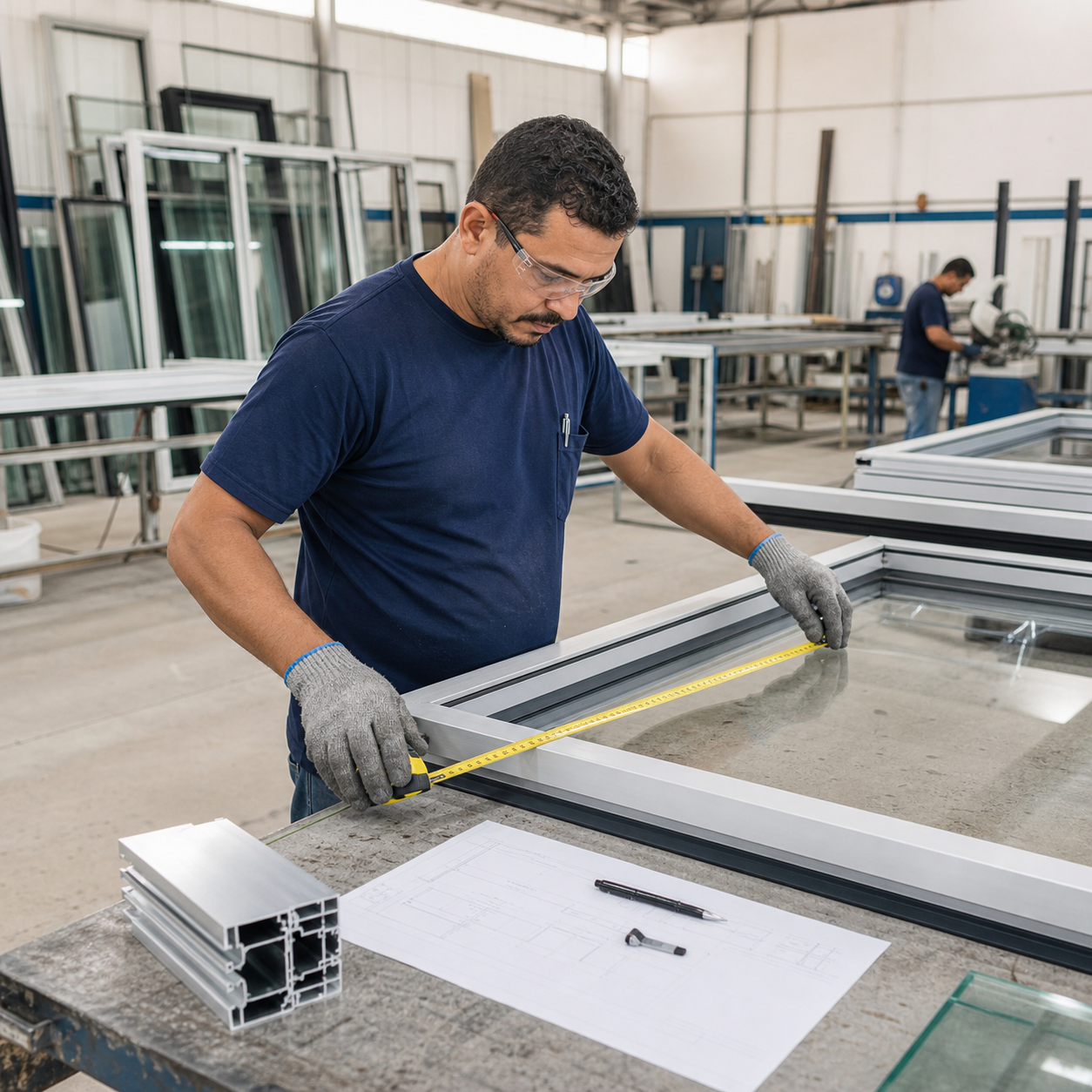
Calculating an aluminum window or door involves more than multiplying width by height. The result depends on opening configuration, system, profiles, hardware, glass, color and the company's composition rules.
1. Opening dimensions
Record width and height, units and any detail affecting fabrication or installation. Inconsistent dimensions are an early cause of rework.
2. Opening type and configuration
Sliding windows, hinged doors and top-hung windows have different compositions. The configuration determines panels, divisions, joints and required components.
3. System and profiles
The selected system determines which profiles can be used and how they fit together. Records must identify the profile for each part, avoiding substitutions based only on memory.
4. Hardware, glass and finish
Include locks, rollers, seals, gaskets and other hardware. Glass type and thickness affect cost too. Color or finish may have a different price and must remain associated with the quote.
5. Costs, waste and margin
After calculating components, consolidate material, service and other planned costs. Then apply the margin for that commercial scenario. A single markup can hide significant differences between products.
Quick checklist
- Dimensions checked;
- opening configuration defined;
- system and profiles compatible;
- hardware and glass selected;
- color or finish recorded;
- costs and margin reviewed.
An organized library reduces repetitive work and makes review more reliable. Aluminus connects calculations and quotes so your team works from a shared foundation.